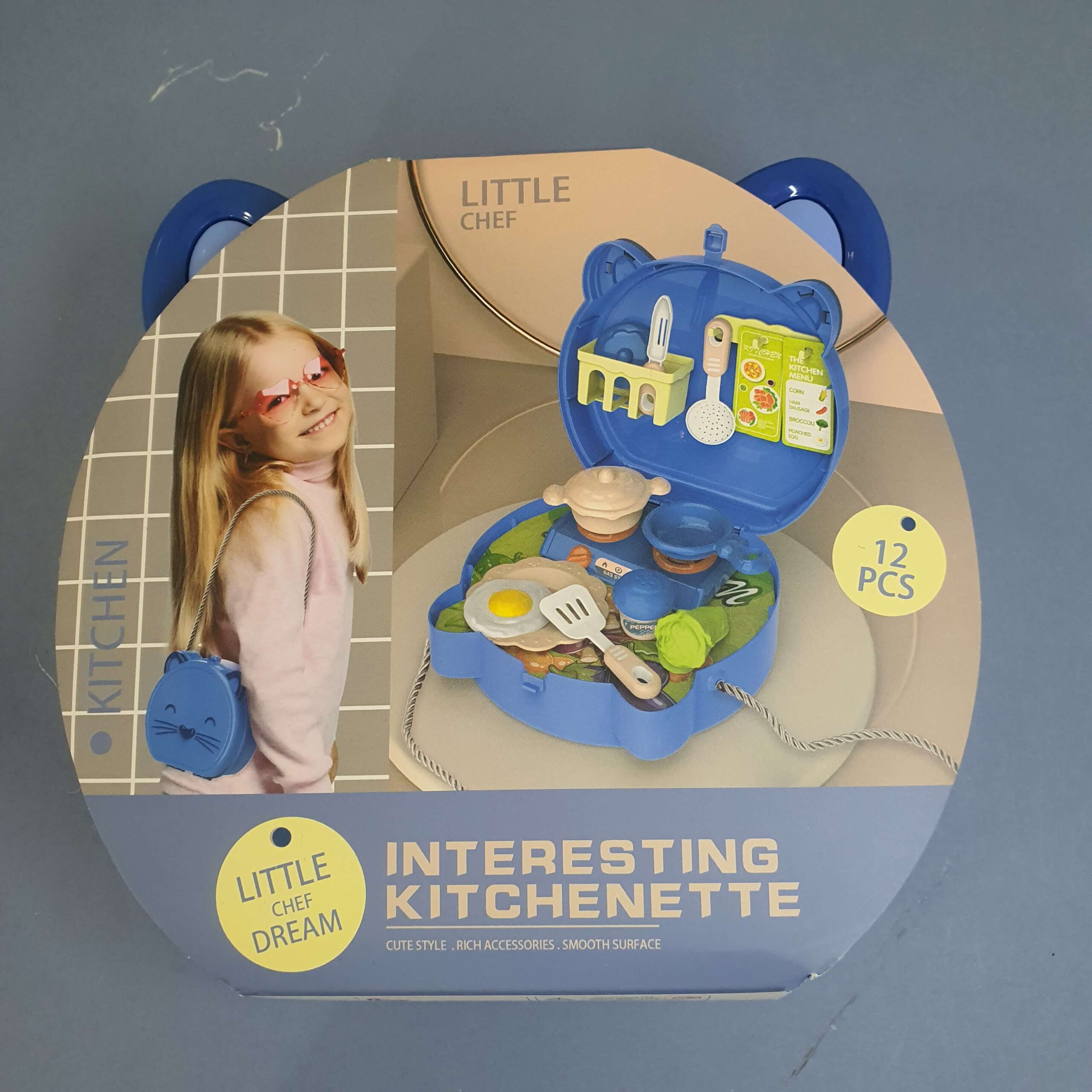
Kitchenette set

A set of toys that mimic a real-life kitchenette, including tools, foods and appliances like egg, spatula, pots, pans and stove. The kitchenette set allows children to be imaginative with their play and inspire creativity. It allows them to mimic actions from daily life in the kitchen in a safe manner. It encourages children with developmental delays to take on different roles and let them explore different scenarios within a kitchen. Fine motor skills can also be developed through actions like cutting, stirring and opening cupboards while playing. It can also aid their visual recognition skills to allow them to associate certain actions to certain objects and teach them about the object’s purpose like how pots are used to cook food. This kitchenette set is useful in helping children develop an array of important cognitive skills, as well as social skills, fine motor skills and even foster creativity.

$20.00

Please fill in your personal details

Select your child age group

1. Does your child respond verbally or look in your direction when his/her name is called?

2. Is your child able to speak yet

3. Have you ever noticed that your child does not respond to sound or that your child might be deaf?

4. Does your child make eye contact during conversation or interaction?

5. When you smile at your child, does he/she respond by smiling back at you?

6. Does your child try to imitate your actions (e.g. nodding, throwing a ball)?

7. Does your child attempt to copy whatever you do?

8. Does your child follow your gaze when you point something out?

9. Is your child social and interacts with other children (e.g. talking, joining them to play)?

10. Does your child engage in imaginative play (e.g. pretend cooking, driving, talking to a doll, feeding a toy)?

11. Does your child talk, laugh, or cry to themselves unexpectedly in any kind of situations?

12. Does your child make unusual hand or finger movements near their eyes?

13. Are there any specific noises that upset or distress your child (e.g. sound of a blender, thunder, loud music)?

14. Does your child become upset and needs to put objects back in order if they're rearranged?

15. Does your child bring items to you to share them with you?

16. Does your child look at you when something interesting occurs?

17. Does your child point with his/her index finger to request for or show you something interesting?

18. Can your child follow simple commands (e.g. eat, sit down)?

19. Is your child overly fascinated with spinning objects?

20. Is your child sensitive to certain sensory experiences or items (e.g. wearing a cap, walking on sand, playing with water or grains)?

1. Can your child easily join in and play with other kids?

2. Is your child able to speak yet

3. Have you ever noticed that your child does not respond to sound or that your child might be deaf?

4. Does your child make eye contact during conversation or interaction?

5. When you smile at your child, does he/she respond by smiling back at you?

6. Does your child try to imitate your actions (e.g. nodding, throwing a ball)?

7. Does your child attempt to copy whatever you do?

8. Does your child follow your gaze when you point something out?

9. Is your child social and interacts with other children (e.g. talking, joining them to play)?

10. Does your child engage in imaginative play (e.g. pretend cooking, driving, talking to a doll, feeding a toy)?

11. Does your child talk, laugh, or cry to themselves unexpectedly in any kind of situations?

12. Does your child make unusual hand or finger movements near their eyes?

13. Are there any specific noises that upset or distress your child (e.g. sound of a blender, thunder, loud music)?

14. Does your child become upset and needs to put objects back in order if they're rearranged?

15. Does your child bring items to you to share them with you?

16. Does your child look at you when something interesting occurs?

17. Does your child point with his/her index finger to request for or show you something interesting?

18. Can your child follow simple commands (e.g. eat, sit down)?

19. Is your child overly fascinated with spinning objects?

20. Is your child sensitive to certain sensory experiences or items (e.g. wearing a cap, walking on sand, playing with water or grains)?

Disclaimer content here

Select your childs age group

Book An Appointment